
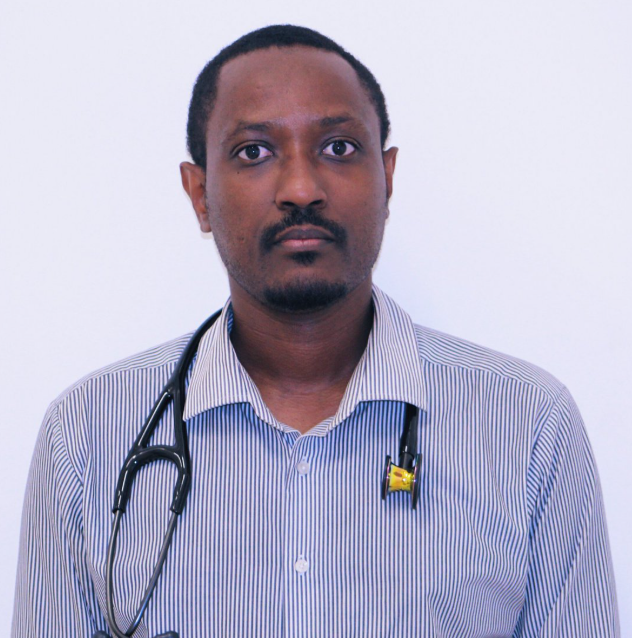
PROFILE
Position: Dean, School of Medicine
Dr Janvier MURAYIRE is an Internal Medicine Physician, Rheumatologist, academic leader, and medical educator whose work has played a defining role in the advancement of rheumatology training, specialist clinical care, and medical education systems in Rwanda. As the country’s first rheumatologist, he has been instrumental in establishing the clinical, educational, and institutional foundations that now support rheumatology practice and training nationwide.
He completed his Internal Medicine training at the University of Rwanda and subsequently pursued advanced fellowship training in Rheumatology at Université Paris-Est Créteil (UPEC), within the Rheumatology Department of Hôpital Universitaire Henri Mondor under the Assistance Publique–Hôpitaux de Paris (AP-HP), France. Following his return to Rwanda, he served for two years as the nation’s only practicing rheumatologist, a responsibility through which he led the development of foundational clinical services, national training pathways, and sustainable institutional frameworks for the specialty.
Dr MURAYIRE currently serves as Dean at Africa Health Sciences University (AHSU), Program Director of the Adult Rheumatology Fellowship at the University of Rwanda, and Vice President of the Rwanda College of Physicians. He previously served as Head of the Department of Internal Medicine and remains actively engaged in postgraduate medical education, specialist training, institutional academic development, and national physician leadership initiatives.
At AHSU, he has led major reforms in medical education through the implementation of competency-based curricula, modern assessment systems, workplace-based evaluations, digital logbooks, and faculty development initiatives aligned with international educational standards. His leadership has further contributed to accreditation readiness processes, strengthening of postgraduate training structures, development of standardized clinical rotation frameworks, and expansion of simulation-based medical education. Through these initiatives, he has played a major role in modernizing specialist medical training environments and reinforcing institutional capacity for high-quality healthcare education.
During his tenure as Head of the Department of Internal Medicine, he strengthened the department’s academic culture through the establishment of regular teaching conferences, journal clubs, morbidity and mortality meetings, and structured scholarly activities. Under his leadership, the department experienced a substantial increase in academic productivity, contributing to approximately 79 scientific publications within a period of nearly eighteen months.
Beyond institutional leadership, Dr MURAYIRE has overseen the expansion of rheumatology services across Rwanda through the establishment of 11 satellite rheumatology units nationwide. These units, staffed by Internal Medicine physicians trained through a structured mentorship and educational framework he developed, have significantly strengthened decentralized access to specialist rheumatologic care and training throughout the country. His mentorship continues to support the emerging generation of specialists who are shaping the future of rheumatology and internal medicine in Rwanda and the region.
He also played a leadership role during Rwanda’s recent Marburg virus outbreak response, during which he was temporarily appointed Clinical Medical Director to support coordination of clinical operations and frontline medical response activities during the national epidemic period.
His academic and research interests include osteoarthritis, inflammatory rheumatic diseases, spondyloarthritis, multimorbidity, digital health, and medical education. He collaborates internationally on peer-reviewed research initiatives, including work related to the DIGICOD osteoarthritis cohort conducted with Sorbonne Université and INSERM research teams in France.
Dr MURAYIRE is also the founder of Rheumascience.org, a multilingual rheumatology educational platform developed to improve access to rheumatology knowledge for patients, caregivers, students, and healthcare professionals worldwide. Available in Kinyarwanda, Swahili, French, and English, the platform integrates educational resources with an artificial intelligence system developed by the Rwanda Rheumatology Team to support clinical learning, symptom-oriented guidance, literature navigation, case generation, and rheumatology-focused education.
Throughout his career, he has contributed to the establishment of enduring academic collaborations with institutions including Yale University, Sorbonne Université, Université Paris-Est Créteil, and Assistance Publique–Hôpitaux de Paris. He is widely recognized for his commitment to clinical excellence, academic rigor, innovation in medical education, and long-term national capacity-building in specialist healthcare training.