
AHSU General Surgery Residency
Train Where Every Rotation Builds a Surgeon
Join one of Rwanda’s growing General Surgery residency programmes.
The AHSU General Surgery Residency offers motivated medical doctors a rigorous, hands-on and competency-based pathway to becoming confident, professional and highly skilled surgeons.
From surgical operations and critical care to surgical simulation, research and laparoscopic skills, residents receive broad exposure designed to prepare them for the realities of modern surgical practice.
A Message from the Chair
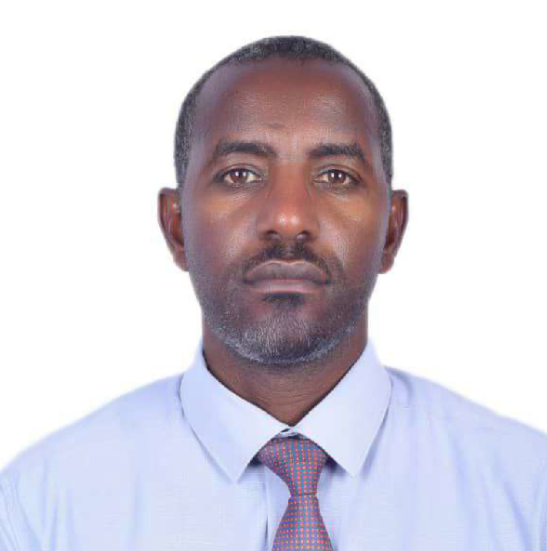
Dr. Desire Rubanguka
Chair, Department of General Surgery
Africa Health Sciences University
Kigali, Rwanda
Dear Future General Surgery Residents,
Welcome to the AHSU General Surgery Residency Programme.
Choosing General Surgery means choosing a career of discipline, continuous learning, teamwork, courage and service. At AHSU, we understand that becoming a surgeon requires much more than learning how to perform an operation.
It requires sound clinical judgement, technical competence, compassion, integrity, leadership and the ability to make safe decisions when patients are at their most vulnerable.
Our programme was established in 2024 with 12 pioneering residents. By 2025, the programme had grown to 22 residents, and it continues to expand with a new group of residents joining every year.
This growth represents more than an increase in numbers. It reflects a growing community of doctors who are committed to improving surgical care in Rwanda, Africa and beyond.
Our residents participate actively in patient assessment, ward rounds, operating theatre, emergency consultations, outpatient clinics, critical care, academic discussions, research and quality-improvement activities.
They also gain experience from different surgical and related specialties, including:
- Anaesthesia and critical care
- Orthopaedic surgery
- Urology
- Neurosurgery
- Oncology
- Radiology
- Surgical endoscopy
- Plastic and reconstructive surgery
- Cardiothoracic and vascular surgery
Residents are gradually entrusted with greater clinical and operative responsibilities as they grow and demonstrate competence under direct mentor-ship.
The programme also offers opportunities for laparoscopic skills development in simulation laboratory and exposure through laparoscopy courses at IRCAD Africa and operation theatre. This strengthens residents’ understanding of minimally invasive surgery, modern surgical technology and safe operative techniques.
At AHSU, you will not simply observe surgery, you will progressively learn how to assess patients, make decisions, assist in operations, perform procedures under supervision and independently, manage complications, conduct research and contribute to a surgical team.
We invite doctors who are ready to work hard, learn continuously and grow into surgeons who lead with competence and integrity.
We look forward to welcoming you to the AHSU General Surgery community.
With warm regards,
Dr. Desire Rubanguka
Chair, Department of General Surgery
Africa Health Sciences University
Kigali, Rwanda
Why AHSU General Surgery?
Why Choose Our Residency?
General Surgery is demanding, but it is also one of the most rewarding medical specialties.
At AHSU, residents join a growing programme that combines broad clinical exposure, academic teaching, operative experience, research and multidisciplinary learning.
Hands-On Surgical Experience
Residents participate in the management of patients from initial assessment through operative treatment, postoperative care, discharge and follow-up.
Clinical responsibility increases progressively according to the resident’s year of training, demonstrated competence and patient-safety considerations.
Broad Surgical Exposure
Residents encounter emergency and elective surgical conditions across different hospital environments under various supervision and mentor-ship skills.
Weekly Academic Activities
Residents participate in structured weekly learning activities that connect clinical experience with surgical science and evidence-based practice.
These sessions encourage active participation, critical thinking and discussion rather than passive learning.
Strong Simulation Culture
Simulation allows residents to practise technical and non-technical skills in a safe environment before applying them in patient care.
Training Sites
Three Main Hospitals and two rotating Hospitals. One Surgical Programme.
AHSU General Surgery residents gain experience across teaching hospitals that provide different patient populations, surgical conditions, levels of care and diverse mentor-ship.
Together, these sites expose residents to tertiary level surgery, regional surgical practice, high-volume caseload and resource-appropriate patient management.
- King Faisal Hospital Rwanda
- Kibungo Level II Teaching Hospital
- Kibuye Level II Teaching Hospital
- Rwanda Military and Teaching Hospital
- Inkurunziza Orthopedic Specialized Hospital
Resident Training
A Structured and Competency-Based Curriculum
The AHSU General Surgery Residency is designed to develop residents across the full range of professional surgical competencies.
Training combines workplace learning, structured teaching, simulation, self-directed study, research, formal assessment, weekly didactics, case discussion, journal club and research.
Who Should Apply?
Is General Surgery Right for You?
The programme is designed for medical doctors who:
- Are passionate about surgical care
- Enjoy solving complex clinical problems
- Are prepared for a demanding training environment
- Value teamwork and professional discipline
- Accept constructive feedback
- Are committed to patient safety
- Want broad clinical and operative exposure
- Are interested in research and quality improvement
- Aspire to become surgical leaders
- Are ready to serve patients with compassion and integrity
Research and Innovation
Residents Contributing to Better Surgical Care
The department encourages research that addresses practical surgical challenges in Rwanda, the region and beyond.
Potential areas include:
- Surgical outcomes
- Trauma care
- Emergency General Surgery
- Surgical infections
- Patient safety
- Access to surgical services
- Minimally invasive surgery
- Oncology
- Perioperative care
- Quality improvement
- Rural surgery
- Surgical education
Residents are supported to present their work at academic meetings and prepare findings for publication.
Research is treated as a tool for improving patient care not simply as a graduation requirement.